Made. Tested. Made again.
Hands-on additive manufacturing
The making process behind my engineering projects: preparing parts, checking fit and using physical behaviour to guide the next CAD revision.
Design decisions become physical
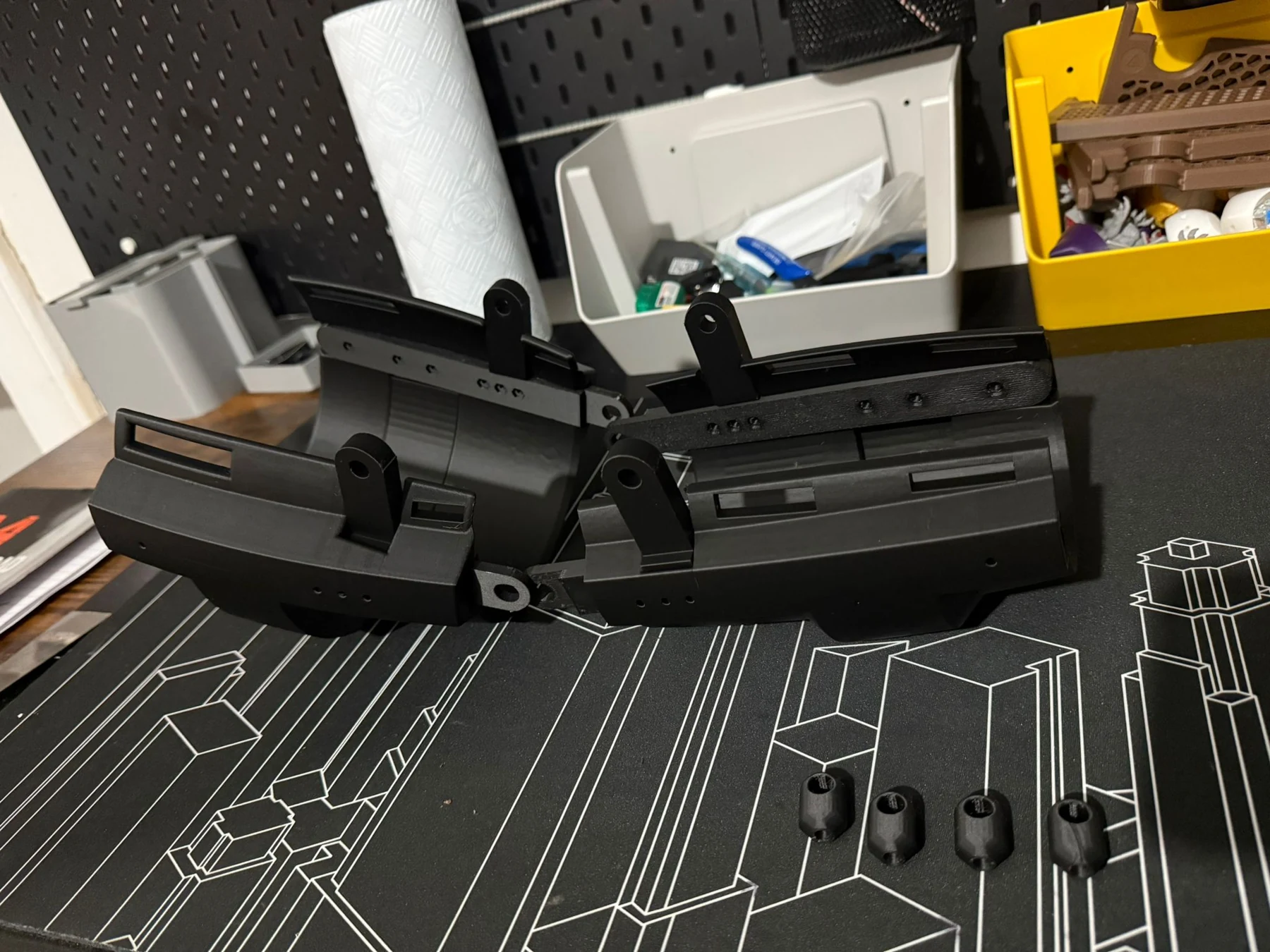
Printing the BeeFlex enclosure made fastening access, joint clearance and surface quality tangible. The trap-tile project exposed a different set of problems, including small-feature strength, latch flexibility and friction at moving interfaces.
Prepare, print, inspect, revise
I consider orientation and support placement before printing, then inspect the component and assemble it with the surrounding parts. Fit issues and unreliable movement feed back into geometry, clearances and material choice.
Use the right evidence
These examples show fabrication within the BeeFlex and trap-tile projects, rather than separate products. The value is in the iteration: learning what the available FDM process can produce and changing the design when a clean CAD model does not work as expected.
1 / 5 · Select image to enlarge
Upper-arm enclosure orientation and support preparation in the slicer.
Selected fabrication evidence from my BeeFlex and MSc trap-tile projects. Detailed design responsibilities and results are documented on their respective case-study pages.
Engineering the unexpected.