Engineering the unexpected.
Mechanically randomised pop-up trap tile
A spring-loaded tile for a modular pirate-themed tabletop game. The same press produces a Safe or Trap outcome, with difficulty changed by swapping a mechanical selector disc.
The design problem
The tile needed to hide its next outcome, reset through one button and survive repeated play without batteries or electronics. I set out to combine adjustable difficulty with a simple, compact mechanism that could eventually fit into a modular game board.
How the mechanism works
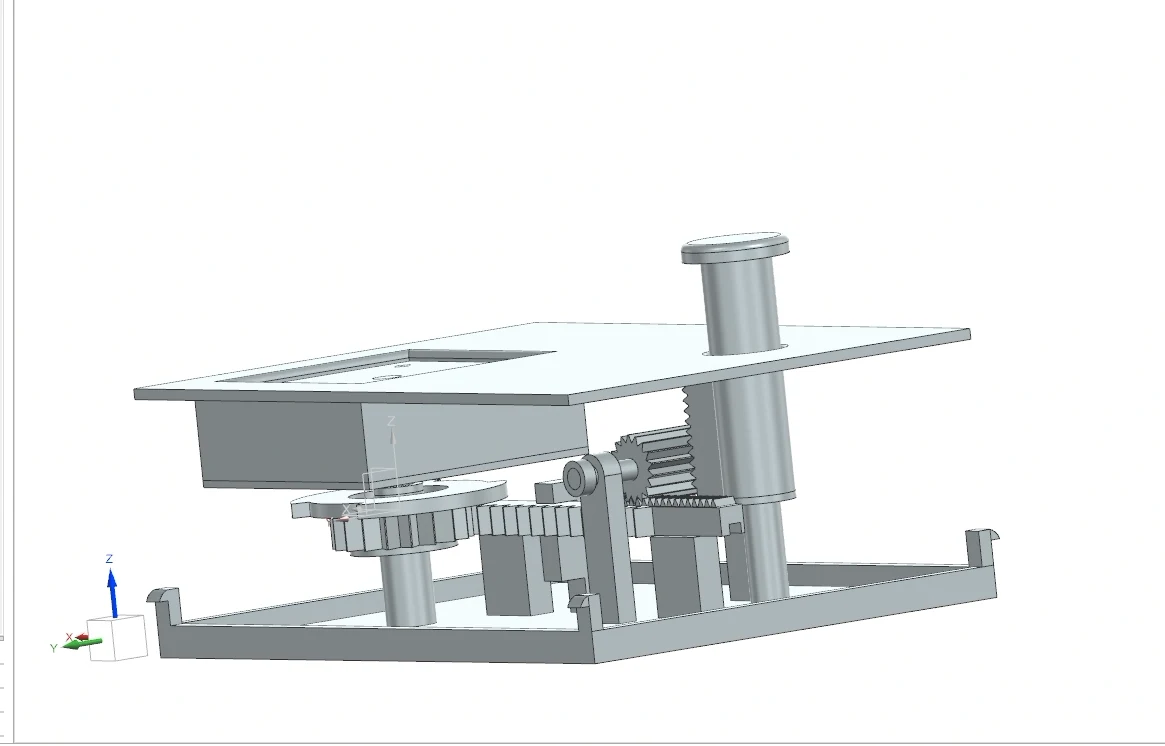
I moved from a hole-based selector and pull-back reset to a perimeter-contact latch and rack-driven reset. Pressing the tile compresses its spring. The selector perimeter determines whether the latch holds it down or lets it pop up. During reset, the rack drives approximately 45° of rotation before disengaging, allowing the disc to continue rotating on its bearing.
What changed at the workbench
Small printed features and friction made the intended 25 to 30 mm tile difficult to test reliably. I enlarged the functional tile to 35 × 35 mm with approximately 15 mm travel. PLA and PETG latch trials led to a more flexible TPU latch. The open assembly photographs show the rack, bearing, selector and spring arrangement that emerged from those iterations.
300 physical activations
I tested each of three discs 100 times, keeping the rest of the mechanism unchanged. Trap outcomes increased from 33% for Easy to 47% for Medium and 63% for Hard. First-reset success was 96%, 99% and 98%, respectively, or 293 successful first resets across 300 activations. These are observed prototype results, compared with ideal Trap probabilities of 33.3%, 50% and 66.7%.
What the results do not prove
Configurable difficulty worked at the enlarged prototype scale, but unbiased randomness remains unproven. The Medium disc never stopped in sectors S6 or T6, and the test recorded 47 mechanical issue observations. One Hard trial differs between the sector tally and the outcome record; the headline results retain the recorded 37 Safe and 63 Trap outcomes.
Next engineering steps
Reduce latch friction, improve rack alignment and disengagement, and repeat the tests over longer sequences. Smaller production geometry, operating force, wear, user experience and toy safety still need validation before this could become a finished product.
1 / 10 · Select image to enlarge
Physical FDM prototype with the housing removed, exposing the tile and reset mechanism.
The enclosed prototype
Manual operation of the physical tile and reset button. This recording demonstrates the mechanism; the reported frequencies come from the separate 300-trial dataset.
Inside the reset mechanism
The exposed rack drives the selector and then disengages. The housing is removed so the moving parts are visible.
Project evidence: MSc dissertation dated 9 September 2026, accompanying presentation, CAD images, prototype photographs and recordings.
Designed around the arm.