A second life for the package.
Mystery egg product and packaging system
A collectible toy and packaging system considered together, from retail display to grouped transport and reuse after opening.
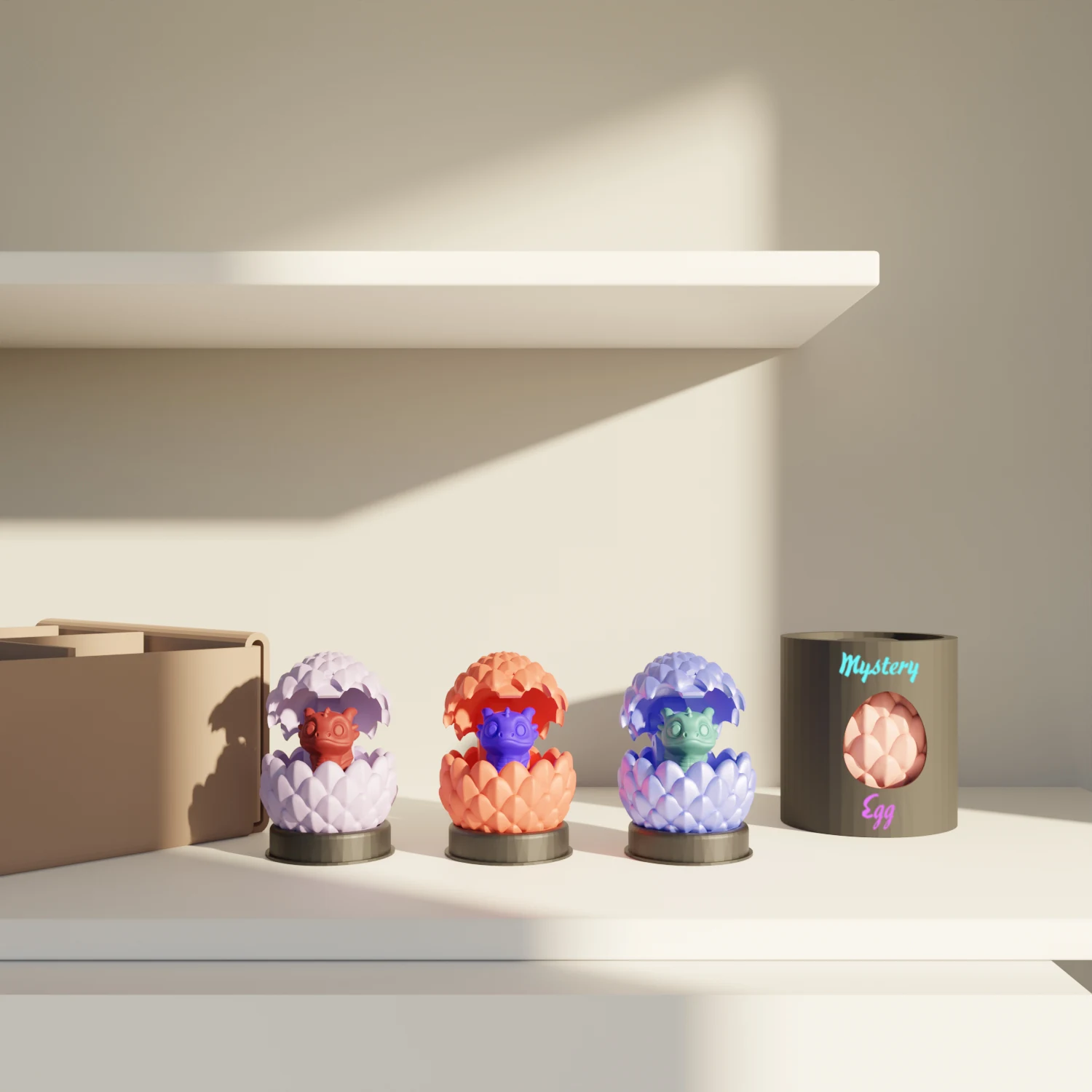
Rethinking the opening experience
The early mystery egg was designed to break open. I developed the lifecycle study around an openable hinge and snap-fit concept so the shell could remain useful after the surprise. This also changed what the packaging needed to support and protect.
One product, two packaging levels
The primary pack combines a cylindrical sleeve, an egg-shaped display window, a paper-based cap and a reusable bottom display base. A divided master carton holds the retail packs for grouped transport. I used a House of Quality and concept selection to connect protection, appearance, reuse and manufacturing requirements.
Designing around the weak points
DFMEA highlighted cap loosening, poor seating, local weakness around the window and deformation during stacking. Taguchi studies explored section thickness and engagement depth. The final concept retained moderate dimensions to balance stiffness against material use: a 1.5 mm sleeve and 3 mm carton and divider sections.
What the simulations showed
The individual report records approximately 1.69 mm maximum deformation for the primary-pack drop case, 0.32 mm for the master carton under 800 N compression, and 0.038 mm in the simplified vibration case. These are simulation results under the stated model assumptions, not physical qualification tests.
The next test is physical
The master-carton impact study provided an acceleration response rather than a deformation acceptance result. Physical drop tests, repeated cap-retention tests, humidity exposure and longer vibration trials would be needed to evaluate the design under more realistic handling conditions.
1 / 9 · Select image to enlarge
CAD of the primary cylinder with its display window and supporting base.
Project evidence: individual Product Design Lifecycle Analysis report dated 12 May 2026 and joint presentation with Hassan Ariyo. The later individual report governs the results summarised here.
Motion, understood.